
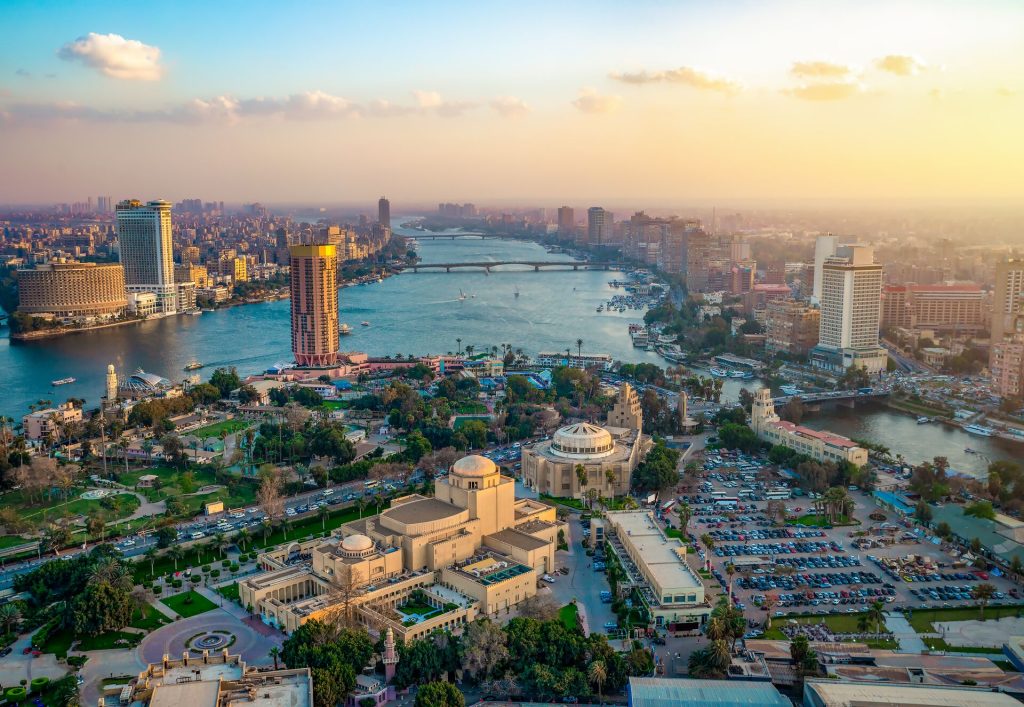
Introduction
Egypt is not just a country on the map; it is a living chronicle of human history. On its timeless land, one of the world’s greatest civilizations was born — a civilization that shaped art, science, architecture, and governance thousands of years ago.
For over 7,000 years, Egypt has been a bridge between past and future, carrying humanity’s legacy from the dawn of the Nile to the digital age.
The Pharaonic Era: The Birthplace of Civilization
The story of Egypt begins around 3100 BC, when King Narmer (Menes) unified Upper and Lower Egypt, marking the start of the Old Kingdom — the age of pyramid builders.
The Great Pyramids of Giza and the Sphinx remain eternal symbols of human genius and ambition.
During this era, Egyptians developed hieroglyphic writing, established systems of government, and excelled in medicine, astronomy, and engineering.
The Middle Kingdom brought artistic and cultural renaissance, while the New Kingdom became Egypt’s golden age under legendary rulers such as Thutmose III, Hatshepsut, Amenhotep III, and Ramses II.
Egypt’s influence stretched across Africa and the Middle East, making it a beacon of knowledge and power.
The Hellenistic and Roman Periods
After the decline of Pharaonic power, Egypt entered a new era under the Greeks (Ptolemies), following the conquest of Alexander the Great.
The city of Alexandria was founded as a global center of learning, with the Library of Alexandria becoming a treasure of ancient wisdom.
Later, under Roman rule, Egypt became the breadbasket of the empire, vital to its economy and trade.
The Islamic Conquest and Transformation
In 641 AD, Egypt entered a new chapter when Amr Ibn al-As led the Islamic conquest, transforming Egypt’s cultural and linguistic identity.
Arabic became the official language, and Cairo — founded later by the Fatimids — emerged as one of the greatest capitals of the Islamic world, full of mosques, schools, and vibrant markets.
The Islamic Dynasties and Ottoman Rule
During the Fatimid and Mamluk periods, Egypt flourished as a hub of art, architecture, and scholarship.
Cairo became known as “The City of a Thousand Minarets.”
Then came Ottoman rule in the 16th century, marking centuries of relative stability until the rise of Muhammad Ali Pasha, who laid the foundation for modern Egypt in the 19th century.
Modern Egypt: From Muhammad Ali to the Republic
Muhammad Ali transformed Egypt into a modern state — building an army, schools, factories, and sending students to Europe to learn modern sciences.
In 1882, Britain occupied Egypt, but national pride never faded.
The struggle for independence culminated in the 1952 Revolution, led by the Free Officers under Gamal Abdel Nasser, establishing the Arab Republic of Egypt and ending the monarchy.
Egypt Today: Progress and Transformation
In recent decades, Egypt has witnessed vast development in infrastructure, education, tourism, and digital transformation.
Projects like the New Administrative Capital, the Grand Egyptian Museum, and the expansion of highways and ports reflect a vision for a modern, connected future.
Egypt today is a growing economic power in the Middle East and Africa, moving toward sustainability, technology, and innovation.
Culture and Society
Egyptian culture is a blend of ancient heritage and modern creativity.
From Pharaonic art to Islamic architecture, from Arabic literature to Egyptian cinema — Egypt has long been the cultural heart of the Arab world.
Its people are known for their warmth, resilience, and humor, carrying a strong sense of identity while embracing progress and modernization.
Tourism and Natural Beauty
Egypt is one of the world’s most fascinating travel destinations, offering a unique mix of history, nature, and adventure:
- The Pyramids and the Sphinx in Giza
- The temples of Luxor and Aswan
- The Red Sea resorts in Sharm El-Sheikh and Hurghada
- The eternal Nile River, lifeblood of Egypt for millennia
- And the Grand Egyptian Museum, a gateway to the timeless wonders of ancient civilization
Conclusion
Egypt is not a story of the past — it is a living, breathing civilization that keeps evolving.
From the pyramids that touch the sky to the skyscrapers of the New Capital, from the ancient temples of Luxor to the modern scientific centers, Egypt continues to connect the roots of humanity with its future.
It stands as a symbol of endurance, wisdom, and renewal, proving that true civilizations never die — they simply evolve.