
Introduction
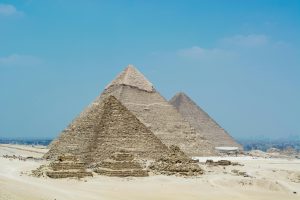
Rising from the golden sands of Giza, the Egyptian Pyramids have stood for over 4,500 years — silent witnesses to the greatness of a civilization that shaped history itself. These ancient structures, built with precision that still amazes engineers and archaeologists today, remain among the most iconic symbols of human achievement.
1. The Mystery of Their Creation

How were the pyramids built? This question continues to puzzle scientists, historians, and dreamers alike. Millions of limestone and granite blocks, each weighing several tons, were moved and placed with astonishing accuracy — long before modern machinery existed. Theories suggest the use of ramps, advanced engineering knowledge, and a massive, organized workforce. Yet the exact methods remain one of the world’s greatest mysteries, adding to the allure of these timeless monuments.
2. The Pyramids of Giza
The Giza Plateau hosts the three great pyramids — Khufu, Khafre, and Menkaure — built as tombs for the Pharaohs of ancient Egypt’s Fourth Dynasty.
- The Great Pyramid of Khufu: The largest and oldest, originally standing at 146 meters, it was the tallest man-made structure on Earth for nearly 4,000 years.
- The Pyramid of Khafre: Slightly smaller, it is distinguished by its smooth limestone cap and proximity to the Great Sphinx.
- The Pyramid of Menkaure: The smallest of the three, known for its unique granite casing and refined proportions.
Together, they form a perfect alignment with the stars of Orion’s Belt — a celestial connection that reflects the Egyptians’ deep spiritual beliefs and astronomical knowledge.
3. The Great Sphinx: Guardian of Eternity
In front of the pyramids sits the Great Sphinx, carved from a single massive limestone block. With the body of a lion and the face of a Pharaoh, it represents strength, wisdom, and the divine power of Egypt’s rulers. For centuries, the Sphinx has guarded the plateau, watching over the tombs of kings and whispering the secrets of the past to the desert winds.
4. Inside the Pyramids
Beneath their grand exteriors lie intricate passageways and chambers designed to protect the Pharaoh’s journey into the afterlife. Within, treasures, inscriptions, and ancient texts reveal the Egyptians’ deep faith in immortality. The precision of these inner structures demonstrates not only architectural genius but also the profound spirituality that guided their creation.
5. Legacy and Modern Significance
The pyramids continue to captivate millions of visitors every year, standing as eternal symbols of Egypt’s identity and the roots of human civilization. They have inspired explorers, scientists, and artists across generations. Today, with modern technology, new discoveries continue to emerge — from hidden chambers to unexplained voids — proving that the pyramids still hold secrets yet to be told.
6. Conclusion
The Egyptian Pyramids are more than stone monuments; they are the heartbeat of history — a timeless reminder of what humanity can achieve through vision, faith, and determination. As the desert sun sets behind their ancient peaks, they continue to tell a story that will never fade — the story of Egypt, the cradle of civilization.