Introduction
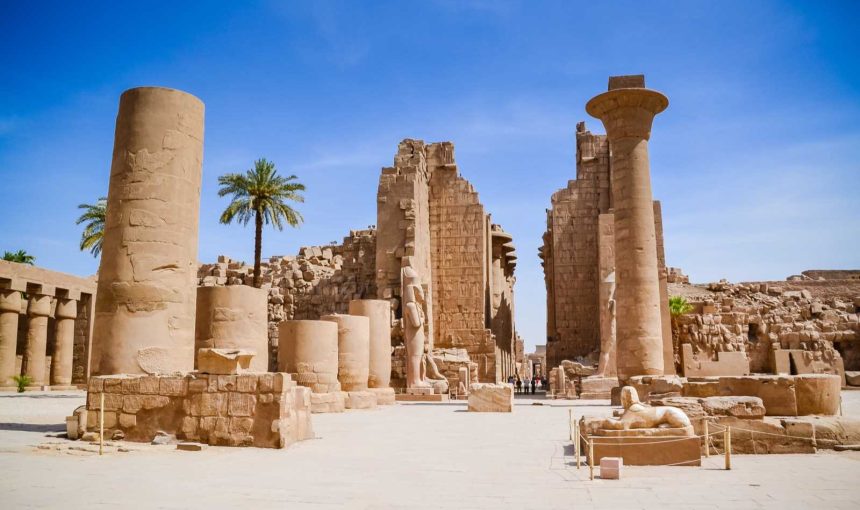
The Karnak Temple stands as one of the greatest monuments ever built by the ancient Egyptians. Located in Luxor (ancient Thebes), it was not just a place of worship but also a powerful religious and political center that shaped Egyptian civilization for centuries.
Construction began during the Middle Kingdom and continued for over 2,000 years, making it a living timeline of pharaonic history and architecture.
1. Architecture and Design
Karnak’s architecture is a masterpiece that reflects the genius of ancient Egyptian engineering.
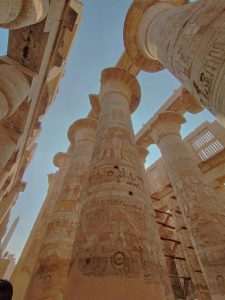
The most iconic feature is the Great Hypostyle Hall, containing 134 massive columns reaching heights of up to 23 meters, creating a breathtaking forest of stone.
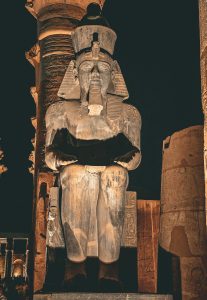
The temple complex also includes a sacred lake, used for priestly purification rituals, as well as colossal statues and obelisks that have withstood the test of time.
2. Religious Ceremonies and Beliefs
Karnak was dedicated to the Theban Triad – the god Amun-Ra, his wife Mut, and their son Khonsu.
The temple hosted major religious festivals, the most famous being the Opet Festival, during which the statue of Amun-Ra was carried from Karnak to Luxor Temple in a grand procession along the Nile — a celebration symbolizing renewal and fertility.
3. Archaeological and Cultural Significance
Today, the Karnak Temple is a UNESCO World Heritage Site and one of the most visited historical landmarks in Egypt.
It serves as an open-air museum that narrates the evolution of Egyptian art, religion, and architecture. Each wall and pillar tells stories of pharaohs, gods, and rituals that defined one of humanity’s oldest civilizations.
Conclusion
Karnak Temple is more than ancient ruins; it is a living testament to the vision and devotion of the ancient Egyptians.
Walking through its colossal halls is like stepping back in time — a journey that connects visitors to the glory, spirituality, and ingenuity of a civilization that continues to inspire the world.